

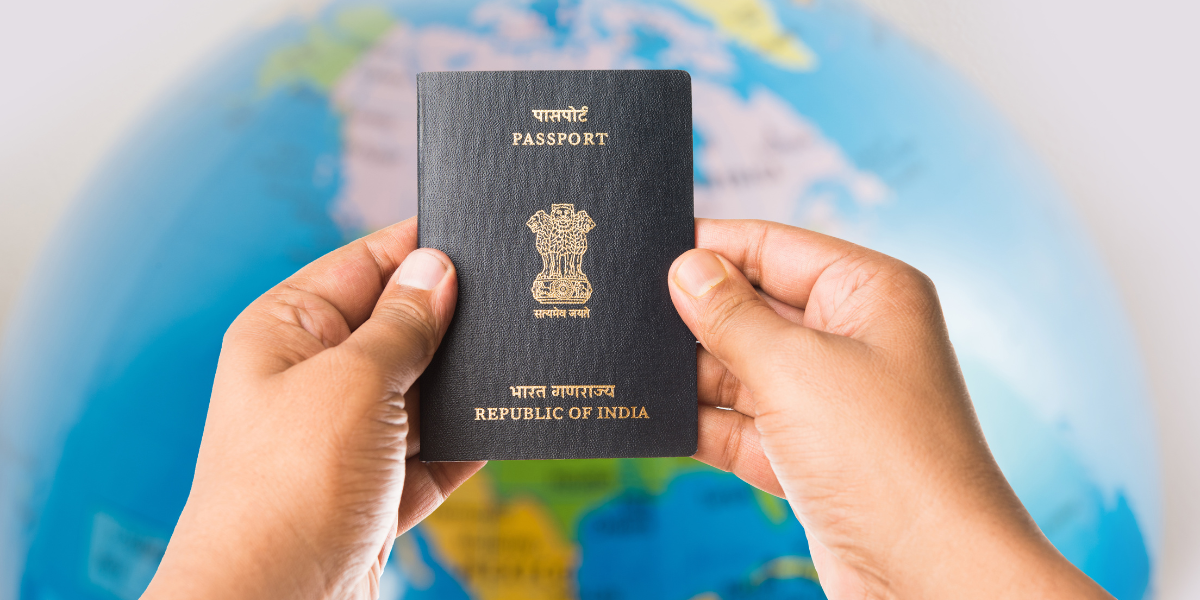
India has officially launched the e-passport facility, marking a major push towards digital governance and modernised travel documentation. Designed to make international travel safer and more efficient for Indian travellers, the move places India alongside more than 120 countries, including the US, UK, Japan and Canada, that already use biometric-enabled passports.
The launch is part of the government’s broader Passport Seva Programme 2.0, which aims to upgrade passport infrastructure, strengthen border security and improve service delivery for citizens. If you are planning to apply for a fresh passport or renew an existing one, here is all you need to know about the new e-passport:
Read more: Top 7 Breaking News Apps You Should Install in 2026
What is an e-Passport?
Short for electronic passport, an e-passport looks almost identical to a conventional passport booklet, but comes with an electronic chip embedded inside its back cover. This chip securely stores the passport holder’s biometric and personal information, including their photograph, fingerprints and facial recognition data.
Keeping in view the rising cyberfrauds and illegal immigration concerns, all this data is stored in an encrypted format, making it significantly harder to duplicate or tamper with. Besides, compliance with global standards set by the International Civil Aviation Organisation (ICAO) will make new Indian e-passports compatible with global immigration and border control systems.
The new ePassport also has a small gold colour symbol below the front cover, which distinguishes it from the regular passports.

What Will Be Key Benefits of India’s e-Passport?
The new e-passport initiative underlines India’s commitment to digital governance and secure identity management. It helps simplify data updates and integrations with other digital platforms such as DigiLocker and Passport Seva online services.
However, the introduction of e-passports is not just a technological upgrade. It brings tangible benefits for travellers while strengthening national security.
- Enhanced Security
The embedded chip and encryption significantly reduces the risk of passport forgery, identity theft and tampering. Biometric data ensures that only the rightful passport holder can use the document, making it more secure than the traditional paper passports.
- Faster Immigration Checks
Automated systems at new airports can quickly read the chip’s biometric data, streamlining entry and exit procedures at immigration counters. Countries with e-gates are already using such a technology to reduce processing time and human intervention.
- Compliance with Global Standards
As India’s new e-passport meets ICAO standards, it will be compatible with global travel systems, enhancing acceptance across international borders.
Eligibility: Who Can Apply for an e-Passport?
Any Indian citizen eligible for a regular passport can also apply for an e-passport. This applies to both first-time applicants and those renewing their passports. At present, e-passport services are available at select Passport Seva Kendras (PSKs) and Post Office Passport Seva Kendras (POPSKs).
According to an NDTV report, currently passport offices in Shimla, Amritsar, Jaipur, Chennai, Hyderabad, Bhubaneswar, Surat, Nagpur, Goa, Jammu, Raipur and Ranchi are currently issuing ePassports. Besides, the government is also planning to expand the rollout across other cities as well in a phased manner.
How to Apply for an e-Passport?
All eligible Indian citizens can apply for the e-passport online through the official Passport Seva portal. Just follow the given steps:
- Register/log in at the Passport Seva portal
- Fill out the application form for a new passport or renewal form.
- Pay the required fees and schedule an appointment at your nearest PSK/POPSK.
- Visit the appointment centre with your documents, where your biometric data and photographs will be captured.
Once processed, your new passport, now equipped with the encrypted chip, will be sent to your address after verification and processing.
Meanwhile, existing passport holders do not need to worry. All passports issued by the Indian government will continue to remain valid till their expiry date, and can get the e-passport upon renewal.
How much is the application fee for e-passport?
E-passport applicants do not need to spend any extra money as the application fee remains same as that for the regular passport. Those applying for e-passports need to submit Rs 1,500 for a 36-page booklet and Rs 2,000 for a 60-page booklet. However, additional charges may apply for Tatkal services, just like for the regular passport.
What This Means Going Forward?
India’s e-passport adoption reflects the government’s push towards integrated digital identity systems and aligns the country with international best practices in travel documentation. For citizens, the transition promiases a safer and smoother experience on global journeys.
In regions where rollout has begun, passport offices are already handling large volumes of applications under the upgraded Passport Seva Programme, demonstrating strong public demand for more secure and efficient passport services.
Also read: What is Wi-Fi 7? Everything You Need to Know

