

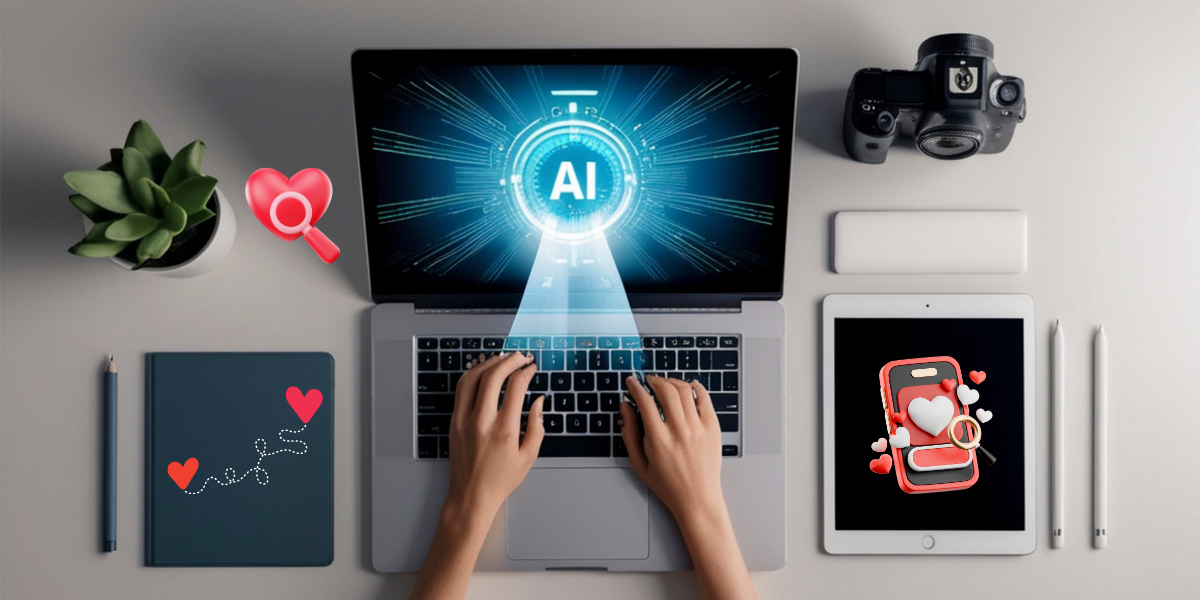
Artificial intelligence has quietly moved from increasing productivity to shaping our personal lives. It initially began as a simple tool to automate repetitive/boring tasks, then students started using it to finish assignments, while professionals began to use it to get their work done.
But now, AI is changing the way people meet, talk and fall in love. Most people today use dating apps, relationship chatbots, and personality-matching technologies. This makes us wonder how much technology might change the way people talk to each other.
Read more: 10 Best AI Apps You Must Try on Android and iPhone
Why AI-Driven Dating is Gaining Momentum?
Due to long work hours, digital fatigue and reduced social interaction, more people are turning towards online platforms to find companionship. At the same time, dating apps have also changed a lot in the last few years. In the past, they simply matched people’s profiles and gave suggestions based on their preferences.
Now, dating sites are using advanced AI algorithms and machine learning to keep an eye on how people use the app, like how often they swipe, message and answer. This data-driven strategy is also a part of the broader industry trend, where personalisation is becoming key pillar of user-centric platforms.

What Is AI Actually Doing Behind the Scenes?
Even though there is a lot of buzz about AI becoming an emotional support tool, its role in dating is mostly functional, not emotional. Finding patterns is something that most systems do really well. They look for things that people have in common, remember what they like and don’t like, and refine their suggestions in real time. Some platforms also use AI to find risky behaviour, get rid of fake profiles and improve safety features.
The Practical Upside—With Clear Limits
There is no doubt that artificial intellgence has made dating easier. It helps people decide what to do when they have too many options and stop matches that don’t make sense.
Besides, embedded AI tools can facilitate communication between prospects by suggesting ideas for how to start a conversation and talk about hard things. This can significantly help people who feel underconfident or shy in making connections.
However, data alone can’t tell you how relationships will change and grow, or how two people may eventually outgrow their love.
When Technology Doesn’t Work?
Love is not a one-time thing; it is a process. AI can tell you who you might get along with, but it can’t replace emotional intuition or human connection.
You need to have times in a relationship when you’re weak, face conflict or feel misunderstood. Even though you may not like the feeling in that moment, it is these moments of conflict and subsequent resolution that actually brings two people closer.
When people rely too much on AI, relationships can start to feel less organic. Romance isn’t usually about being perfect. Even couples with the most beautiful love stories have flaws.
What This Means for the Tech World?
AI-driven romance is only one example of how technology is shaping the way people connect and communicate. Personalisation algorithms are no longer about finding the right books to read or latest movies to watch. They are also influencing our decision-making and social circles.
This link between emotions and technology means that developers, platforms, and regulators all have more work to do. Tools that affect relationships need to start taking emotional health, consent and agency into consideration.
Making Human Choices in a Digital Age
AI can help people meet. It can help them communicate. It can even help them reflect. But it cannot replace the emotional effort, mutual understanding or the willingness to choose another person repeatedly.
Also read: The Problem With Blindly Trusting AI, & How to Use It Smarter


